- How much does on-premise ANPR cost?
- One ANPR Edge license per location, paid once: $2,500 for up to 4 cameras or $6,500 for unlimited cameras. Every license reads plates from all six GCC countries and includes vehicle make, model and colour. More locations cost less: the 2nd to 5th unlimited license is $4,000 each and the 6th onward $2,500. Nothing bills per read. Hosting the engine in your own container is a different product, quoted per deployment.
- Which countries does a license cover?
- All six on every license: the UAE, Saudi Arabia, Qatar, Kuwait, Bahrain and Oman. There is no country to choose at checkout and nothing extra to buy when a car from a neighbouring country pulls in.
- How many cameras can one license run?
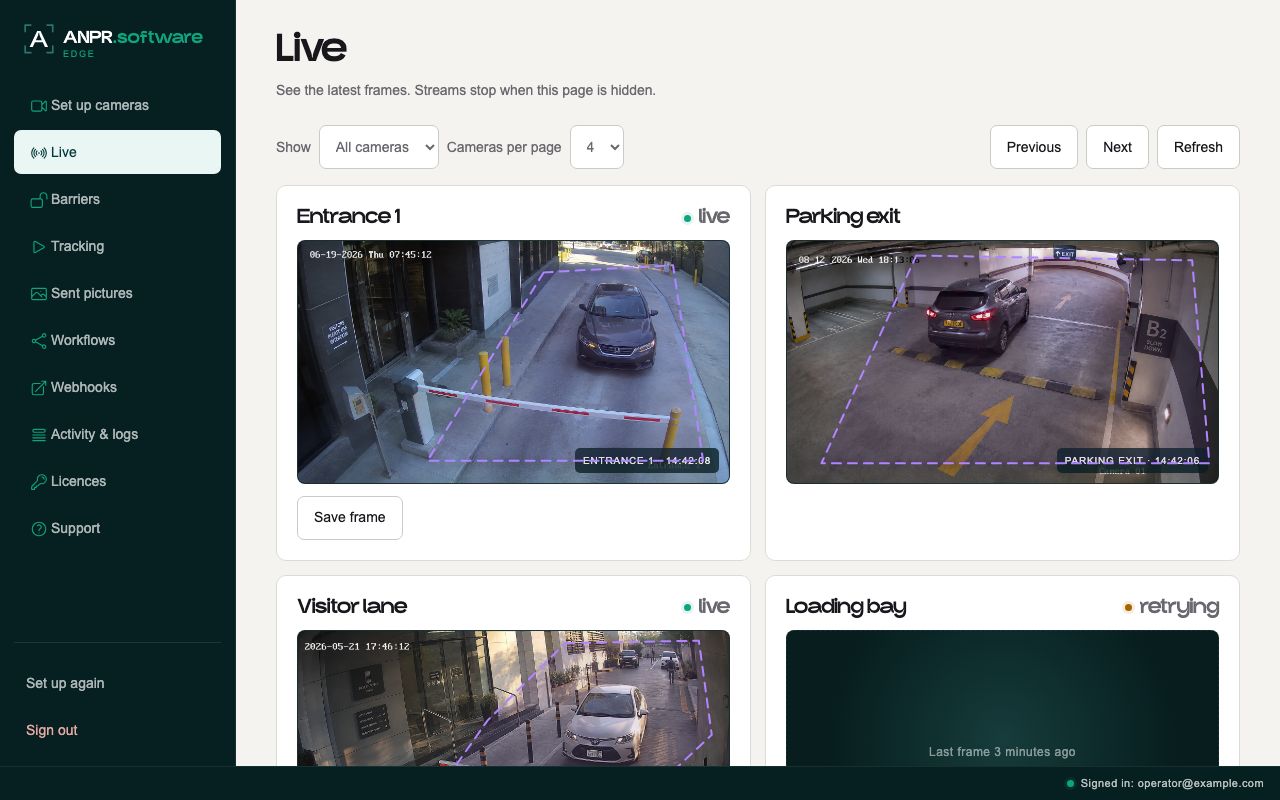
- The unlimited license puts no limit on cameras; the 4-camera license covers up to 4. How many cameras one PC runs depends on its hardware: we measured 16 cameras in Parked cars mode on a Core i7 desktop. Need more cameras? Upgrade the PC. Your license stays the same.
- Does ANPR Edge work offline?
- Plates are read on the PC at your location, so a dropped internet connection does not stop the gate. The PC does check in with us at least every 3 days for licensing and updates. Need a sealed network? We provide a fully air-gapped deployment on request, and the container can run air-gapped too.
- What happens after the first 12 months?
- The license keeps working indefinitely. It includes 12 months of updates; after that, updates are optional at $1,170 a year per unlimited license or $450 a year per 4-camera license.
- Does on-premise ANPR work with Hikvision and Dahua cameras?
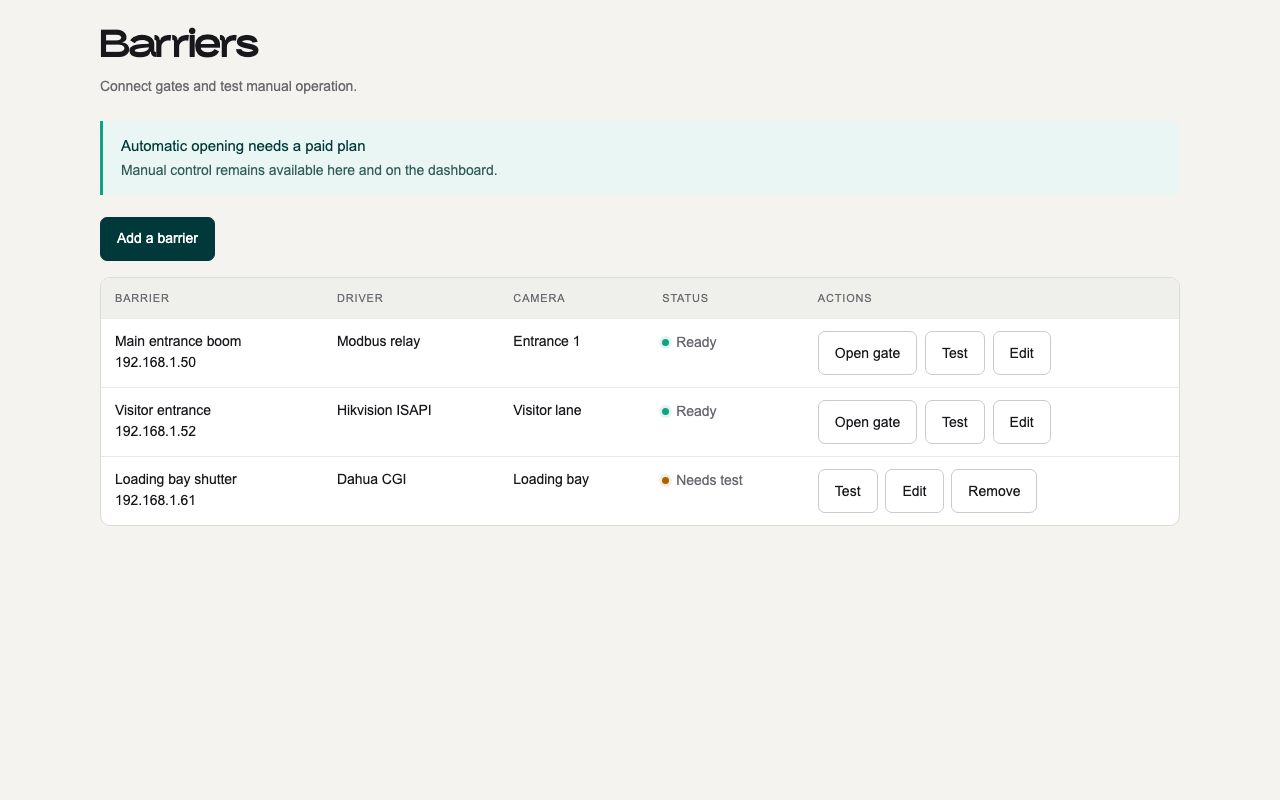
- Yes. Hikvision is driven over ISAPI and Dahua over CGI, with Modbus TCP relay boards for the barrier. Any camera producing an ONVIF or RTSP stream can be used as a source.
- Do you provide an ANPR SDK?
- Not as a linkable library. Integration is through the documented API, and on-premise installs expose the same interface locally.
- How fast is recognition without a cloud round trip?
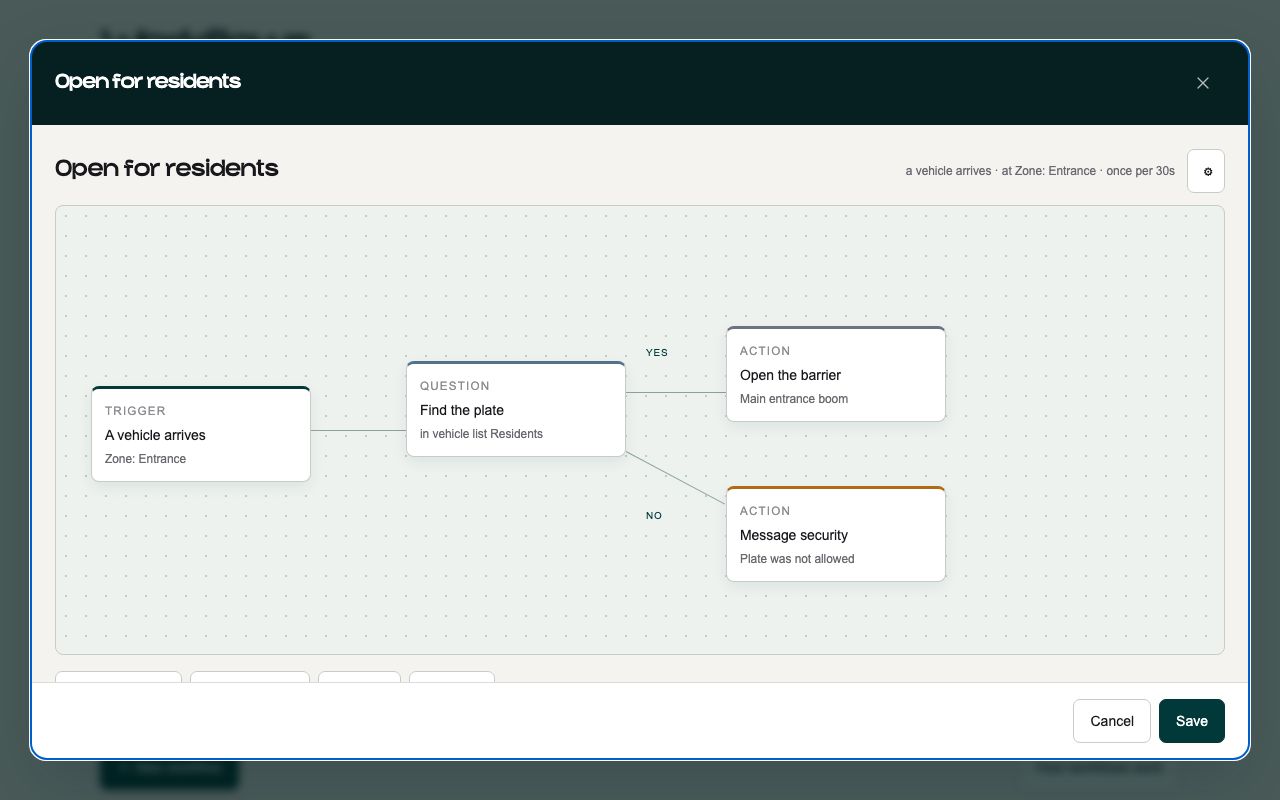
- The barrier decision happens on the machine that read the plate, inside roughly a hundred milliseconds, because nothing is waiting on an uplink.