
The stay is two reads and a clock
A paid car park needs to know which vehicle is inside and how long it has been there. Everything else — tariffs, permits, season tickets, free windows — is arithmetic on top of that. Two cameras and a plate give you the part everything else rests on.
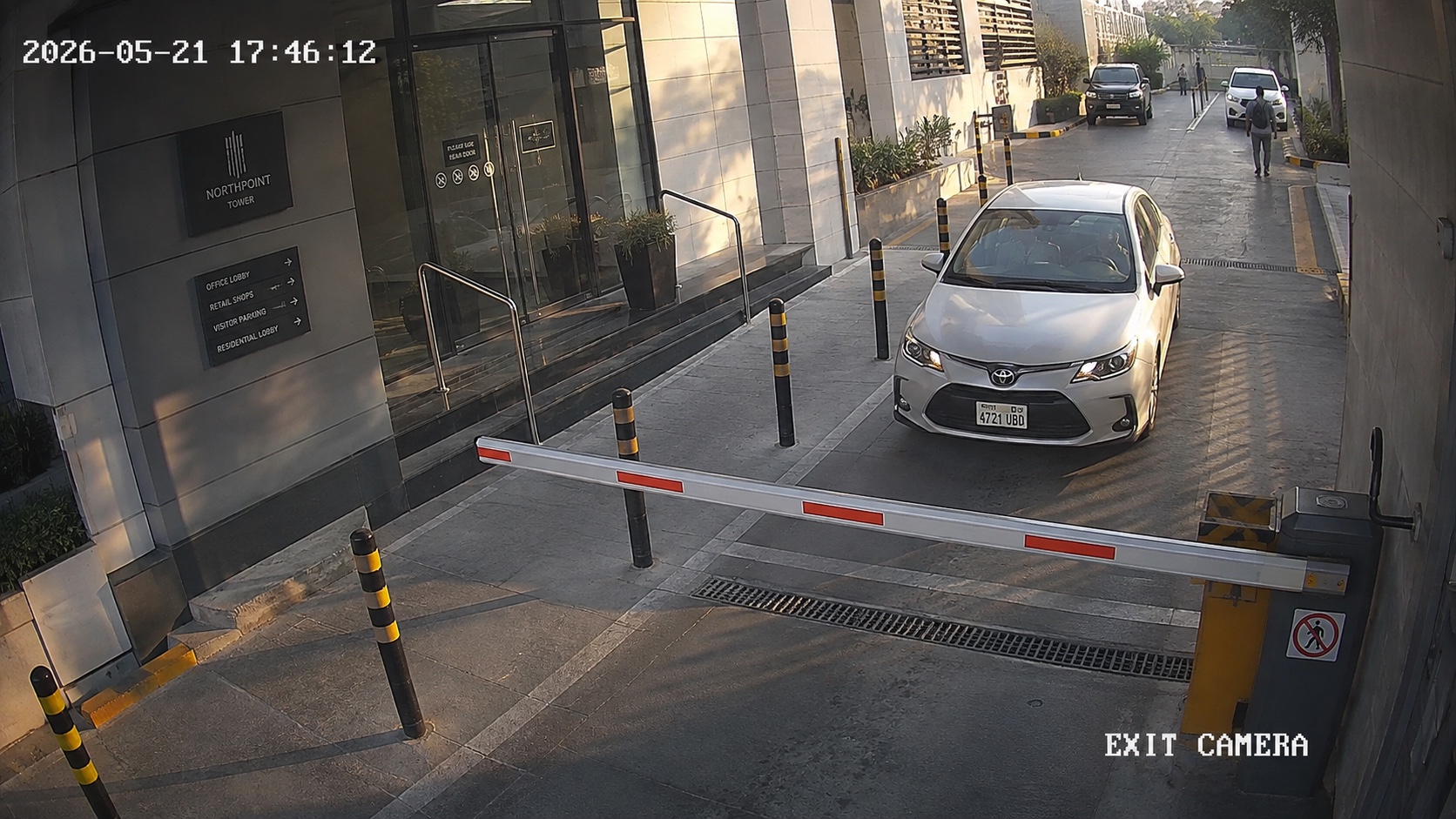
The ticket is the weakest part of the system
Every ticket is a piece of hardware that jams, a roll of paper that runs out, and an object a customer can lose between the car and the pay station. The lost-ticket tariff exists because that happens constantly, and each one is an argument at a barrier with a queue behind it. A plate cannot be left in a coat pocket.
How it runs
- Trigger
Entry read opens the stay
The camera on the entry lane reads the plate and the clock starts. Nothing is issued, so nothing can be lost.
- Question
Which rate is this vehicle on?
The rule checks the plate against the tables you already keep — season tickets, staff, tenants, contract parkers, blocked vehicles. A Google Sheet the office edits is a perfectly good table.
- Action
Exit read closes it, and the amount is already known
Permit holders and vehicles inside a free window get a barrier that simply opens. Everyone else arrives at a figure that was worked out while they were walking back to the car.
Occupancy you can act on
Direction is part of the read and counting runs on the machine that made it, so occupancy per car park is a live number rather than something reconciled overnight.
Permits are a table, not a project
A season ticket sold this morning is a row added this morning. It can arrive from a sheet, a CSV, or an HTTP call from whatever you sell parking through.
Parking kiosk
A find-your-car screen for your lobby
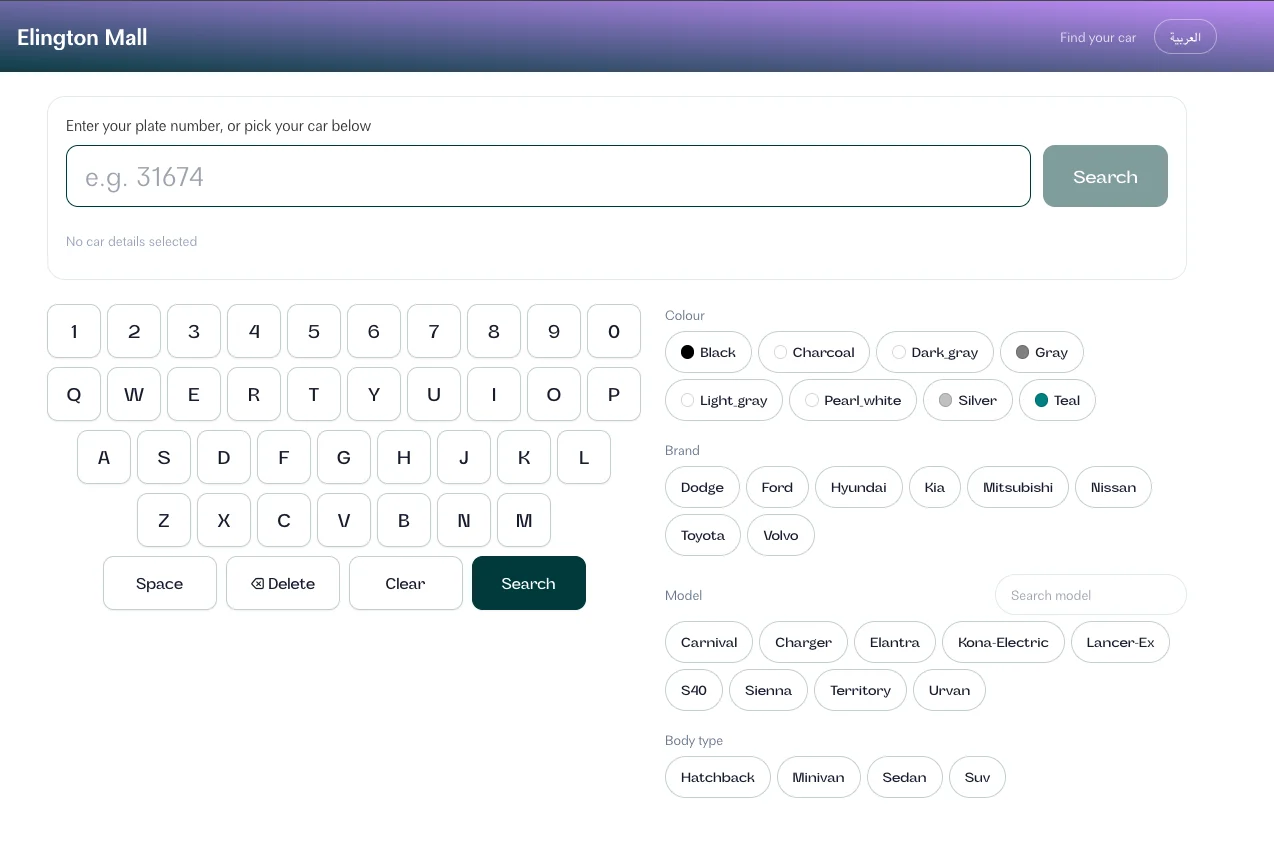
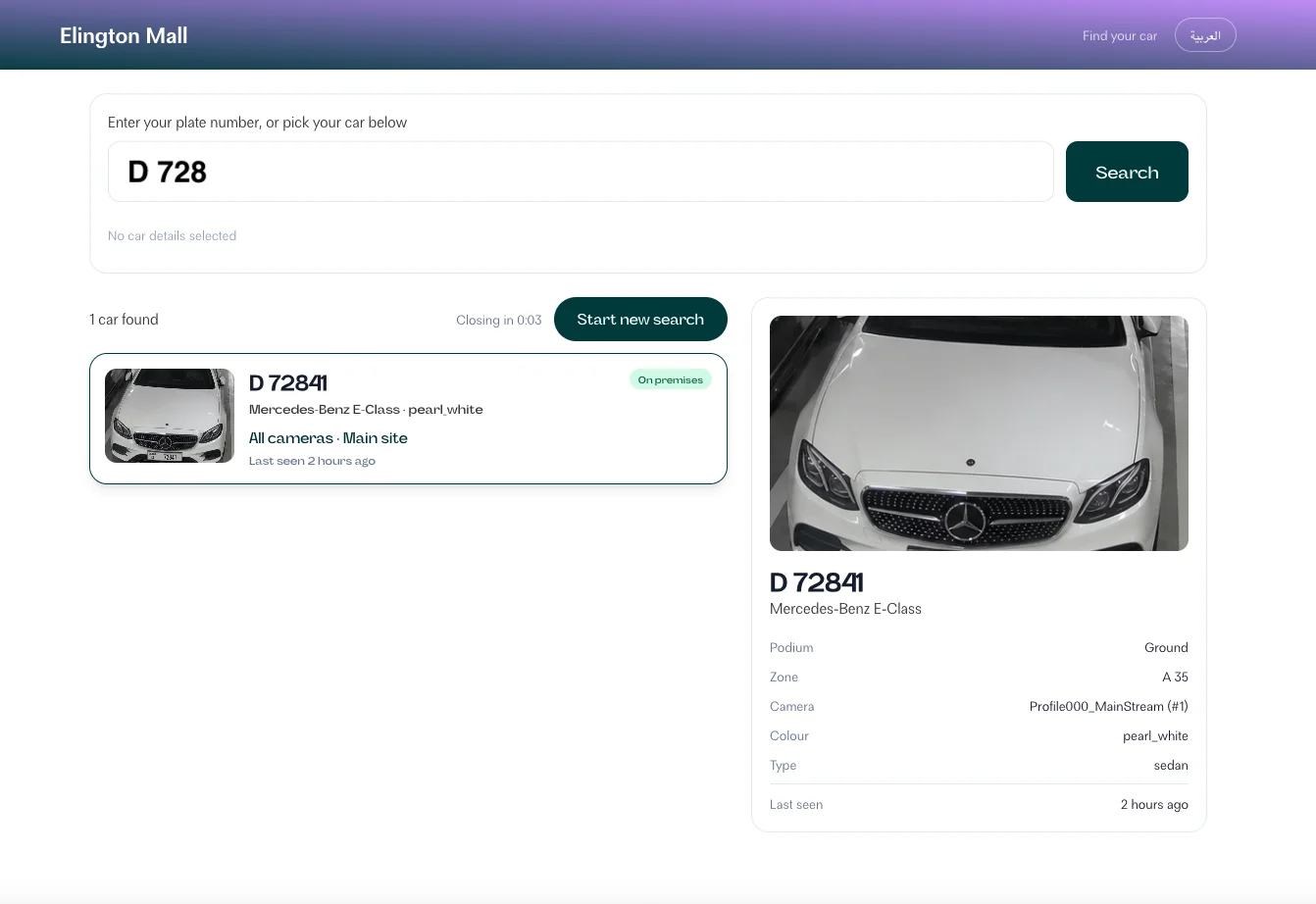
Put a touch screen by the lifts or the pay stations. Visitors type their plate, or tap the colour, make and model they remember, and see where their car is parked — with its photo.
- Search by full or partial plate, or by colour, make, model and body type.
- Shows the car’s photo, level, zone and when it was last seen.
- Your name, logo and colours, set in the dashboard.
- English and Arabic, switched on the screen.
- Clears itself after 90 seconds without a touch, so no plate is left on display.
- Runs in the browser of any touch screen: open your kiosk link and sign in once.
- Works only on that screen, and you can sign every kiosk out from the dashboard.
Works with a monthly plan, where plates are read in the cloud, and with an on-prem license, where the kiosk searches the plates ANPR Edge has read on your site PC.
Set up your kiosk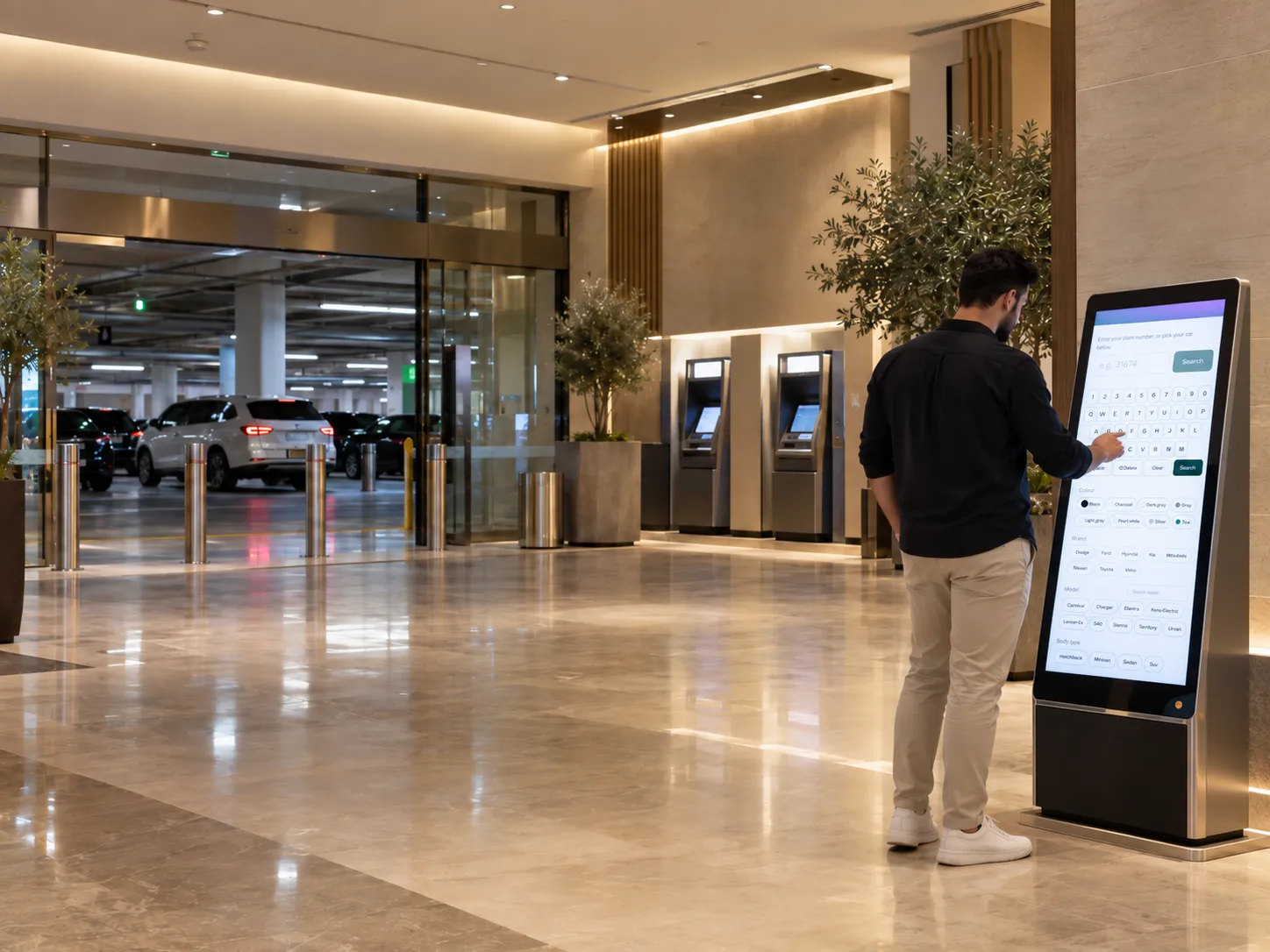
What it takes to run
- Ordinary IP cameras. No dedicated ANPR hardware — Hikvision over ISAPI, Dahua over CGI, or anything that gives an ONVIF or RTSP stream.
- Whatever barrier is already there. It is driven over ISAPI, CGI or a Modbus relay board, and all three end at the same momentary contact.
- One Windows or macOS machine on the same network as the cameras, or nothing at all if you run against the cloud API instead.
- A list you already keep. A Google Sheet, an uploaded CSV, or rows typed into the app — to a rule they are the same table of plates.
Questions
What happens when a plate will not read?
It falls back to whatever your site does today for an unreadable entry — an intercom, an attendant, a button. A plate reader should degrade to the manual path, never trap a driver at a barrier.
Can it run several car parks together?
Yes. ANPR Edge is licensed per location, so each car park is one license on its own PC with no limit on cameras on the unlimited license, and the 2nd to 5th licenses cost less than the first. Car parks on the cloud API need no license at all.
Do we have to replace the barriers?
No. Barriers are driven over Hikvision ISAPI, Dahua CGI or a Modbus relay board, and all three end at the same momentary contact the existing controller already accepts.
Tell us about the lanes
How many entrances, what the barrier is, and how you sell permits today. That is enough for us to describe what the exit rule looks like.
Talk to us about thisHow operators automate parking like this
Paid parking runs on knowing which car is where and for how long. Plate recognition turns any existing IP camera into that sensor, so entry, exit and billing happen without a ticket machine or a person in a booth.